
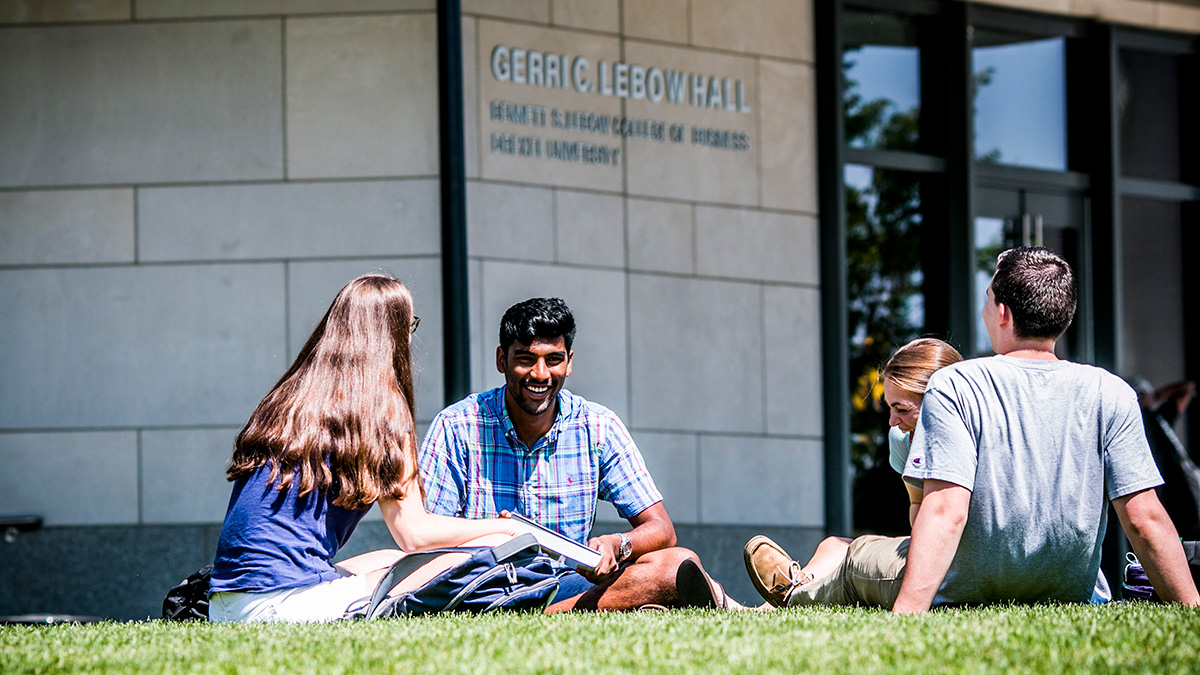

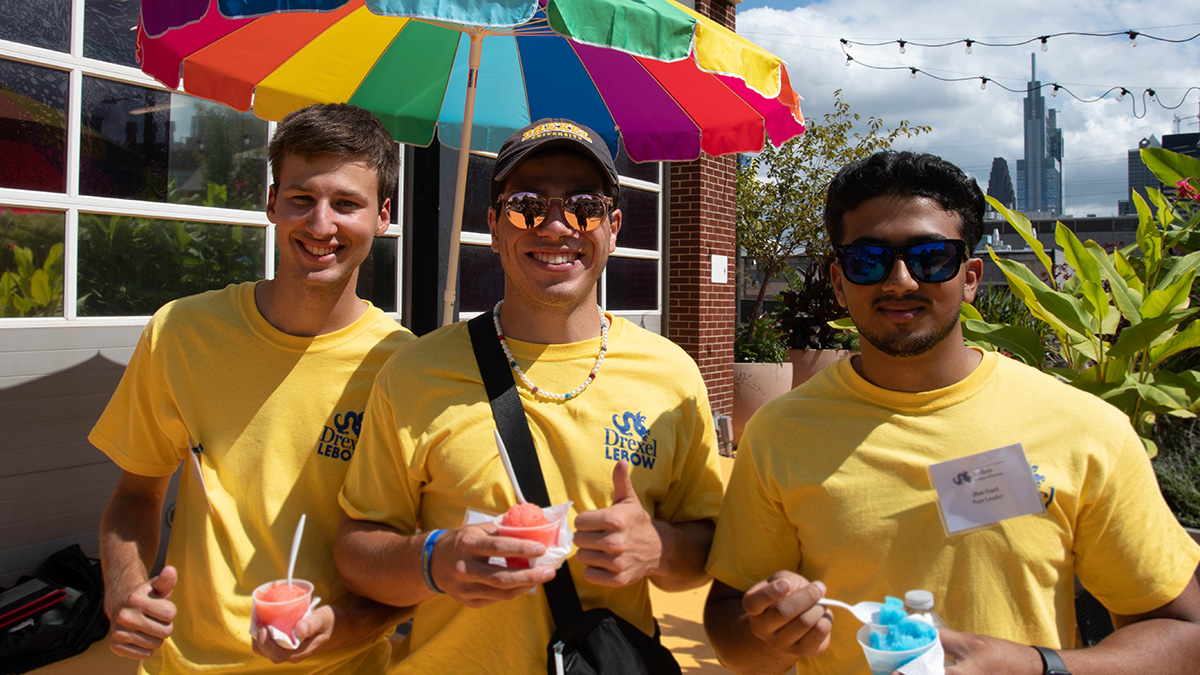
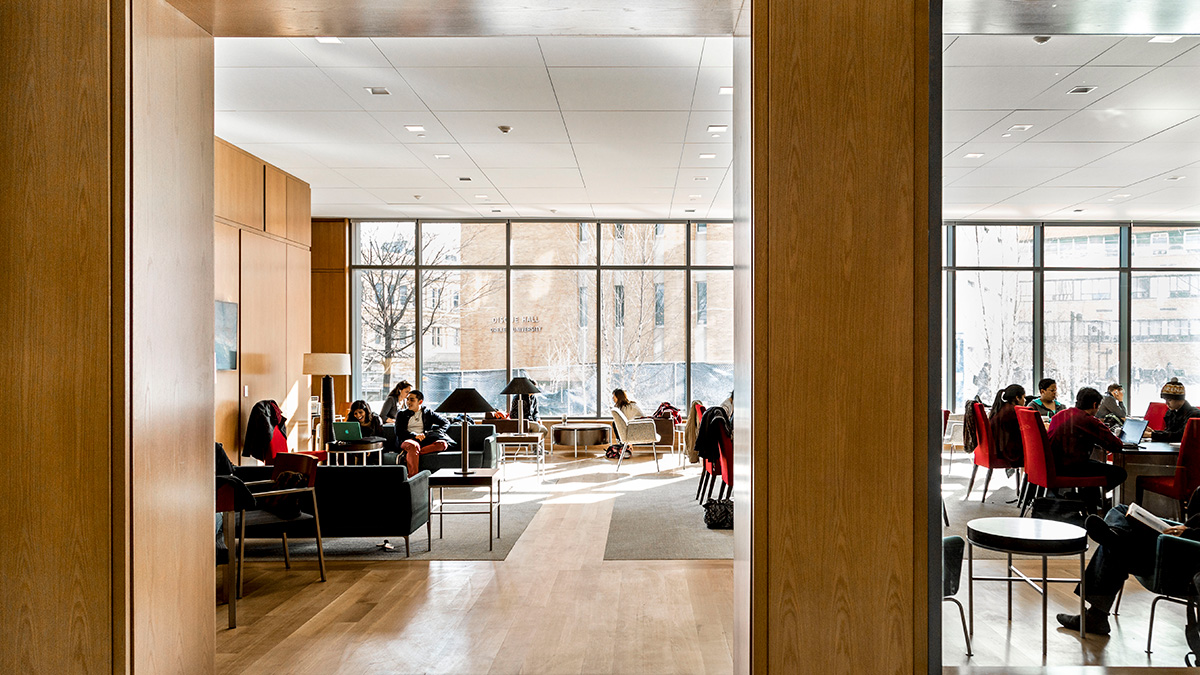
Drexel BS Economics student in the classroom

Bachelor of Science in Economics

Drexel University’s STEM-designated Bachelor of Science in Economics, housed in the School of Economics at the LeBow College of Business, focuses on providing the quantitative methods, analytical reasoning and professional skills required to understand economic systems and policy challenges. Coursework includes specialized statistical and econometric methods for estimating the effects of economic shocks and policy changes, with a strong focus on empirical analysis. Additionally, through extensive free electives, you can shape the degree around your own academic interests.

Faster Than Average

Projected employment growth in business and financial occupations from 2024 to 2034

U.S. Bureau of Labor Statistics

$89,364

Average starting salary

School of Economics' Class of 2024

Why Study Economics at Drexel LeBow?

Economic decisions shape nearly every aspect of business and society. At Drexel LeBow, you’ll learn to analyze those decisions using quantitative methods while exploring how incentives, markets and institutions influence outcomes ranging from business strategy to public policy.

Faculty in Drexel’s School of Economics are recognized experts in areas including international trade, macroeconomics, industrial organization and behavioral economics who bring current economic issues into their teaching and mentor students through research and applied projects.

Drexel LeBow’s BS in Economics:

  • Builds expertise in economic modeling, statistics and econometrics so you can analyze complex problems using quantitative methods.
  • Develops advanced data analysis and empirical research skills through hands-on projects that strengthen both technical and communication abilities.
  • Connects economic theory to real-world business, financial and public policy challenges using current economic issues and applied learning experiences.
  • Provides the flexibility to customize your degree with free electives while gaining professional experience through Drexel’s renowned co-op program.

Inside the BS in Economics Curriculum

Students learn how economists use mathematical models, statistical and econometric methods, and data analysis to understand economic systems, evaluate policy decisions and analyze practical problems affecting businesses, governments and communities.

Applied empirical projects, written reports and presentations strengthen students’ quantitative reasoning and ability to communicate technical results clearly and effectively. Extensive free electives allow students to tailor the degree around their academic interests.

Review the Degree Requirements
View a Sample Plan of Study

Course Highlights Include
ECON 2301: Microeconomics

This course introduces structured economic thinking grounded in microeconomic theory. Students will build quantitative foundations for understanding how demand, costs, market structure, and government policy interact to determine market prices. The course emphasizes how economic fundamentals shape the distribution of value, providing a basis for informed decision-making in areas such as pricing, output, and market entry or exit.

ECON 2302: Macroeconomics

This course provides an in-depth introduction to dominant theories behind short-run economic fluctuations and long-run economic growth. This course employs both mathematical and graphical tools to discuss determination of output, employment, and price level in the aggregate economy. It also covers effectiveness of monetary and fiscal policies in dealing with unemployment and inflation. As a required course, it supports progression in the program. Students will learn to apply key concepts, analyze real-world situations, and communicate evidence-based recommendations.

ECON 2250: Game Theory and Applications

This course offers a systematic introduction to game theory, the study of strategic interaction among individuals and organizations. Students will learn core concepts such as strategies, beliefs, and equilibrium in both static and dynamic settings. Applications span economics, politics, business, psychology and modern digital environments. By the end of the course, students will develop analytical reasoning and problem-solving skills, learn to model strategic situations formally, and practice applying theoretical tools to real-world contexts.

ECON 2350: Applied Econometrics

This course is an introduction to econometrics, the study and application of statistical methods to address real-world problems using economic data. The concepts and tools learned This course have broad applications to business, the social sciences, law, public health, etc. Typical problems include estimating the returns to education, the effect of interest rates on unemployment, or the impact of alcohol taxes on traffic fatalities. An emphasis on causal inference and threats to causal identification permeates the course. Major topics include the fundamentals of probability and statistics, hypothesis testing, linear regression, non-linear relationships and interaction effects, internal and external validity, fixed effects, limited dependent variables, and instrumental variables estimation.

ECON 4901: Economics Seminar

This course is designed to give students who have taken several courses in economics an opportunity to put what they have learned to work, and gain wider and deeper knowledge of the field, though research, discussions and writing. Students will share their work by oral presentation to the class, with mutual assessment of progress. A paper will also be required.

Drexel LeBow Student on Co-op

Drexel Co-op and Experience

Through the Drexel Co-op program, students alternate classroom learning with full-time professional experience through University-approved employers. With plans of study that allow for up to three co-ops, you can gain as much as 18 months of practical experience while building professional networks, developing career clarity and applying classroom knowledge in real-world settings.

Up to 18 months of experience

Graduate with as much as 18 months of experience in the workplace

$21.50

Median co-cop hourly pay for BS in Economics students

45%

of co-op students received a full-time job offer from their co-op employer

LeBow Class of 2024

Our students have done their co-ops in a variety of organizations, both locally and around the world.

Past BS in Economics co-op placements include:

BlackRock, Draeger, Goldman Sachs, Lockheed Martin, SAP

Beyond Co-op

Co-op is just one way to gain real-world experience at LeBow. Many students also expand their experience through consulting courses, case competitions, research projects, international residencies, industry events, alumni mentorship and other hands-on learning opportunities.

Many of these opportunities are made possible through the Dana and David Dornsife Office for Experiential Learning, where students work on real and simulated projects with industry partners. Partners have included organizations such as Unilever, the Philadelphia 76ers, Boeing, PwC, and nonprofit and governmental agencies.

Isabella Santosusso Headshot

One of the best parts of LeBow is getting to meet and work with so many people that are willing to help and who you can look up to. I never thought I could present our research at a global conference — it was an incredible experience.

Isabella Santosusso ’21

Read more about Isabella

What Can You Do With a BS in Economics?

Through its technological orientation, emphasis on experiential learning, and cooperative education model, Drexel positions BS in Economics graduates at the leading edge of analytically driven professions.

Graduates are prepared for a range of careers, such as:

  • Consulting
  • Policy analysis
  • Finance
  • Fields that rely on applied statistical and numerical methods

The program also provides strong preparation for graduate study in economics and related analytical fields.

Learn more about career opportunities in economics

Take the Next Step

All undergraduate applications are processed through Drexel University’s central admissions portal. Have questions about applying to LeBow? Our undergraduate enrollment team is here to help.

Tuition and Financial Aid

Find the information you need to plan for your education through Drexel Central. Review tuition and fees, estimate the cost of attendance, and explore financial aid resources, including scholarships, grants, loans and payment options.

Upcoming Events

DiPiero Grand Meeting Room and Rose Terrace, , ,

Hear from leading voices on the current state of the U.S. economy and an outlook on the future.

Gerri C. LeBow Hall, 3220 Market Street, Philadelphia, Pennsylvania

An information session about LeBow’s business consulting courses: project-based opportunities collaborating with companies to tackle business challenges.

See upcoming events

Connect with Us

Our staff is ready to help you with any questions you may have about the application process, including which program is right for you. We look forward to hearing from you.

Caitlin Brady

Director, Undergraduate Programs and Recruitment

(215) 571-3570

Gerri C. LeBow Hall 333