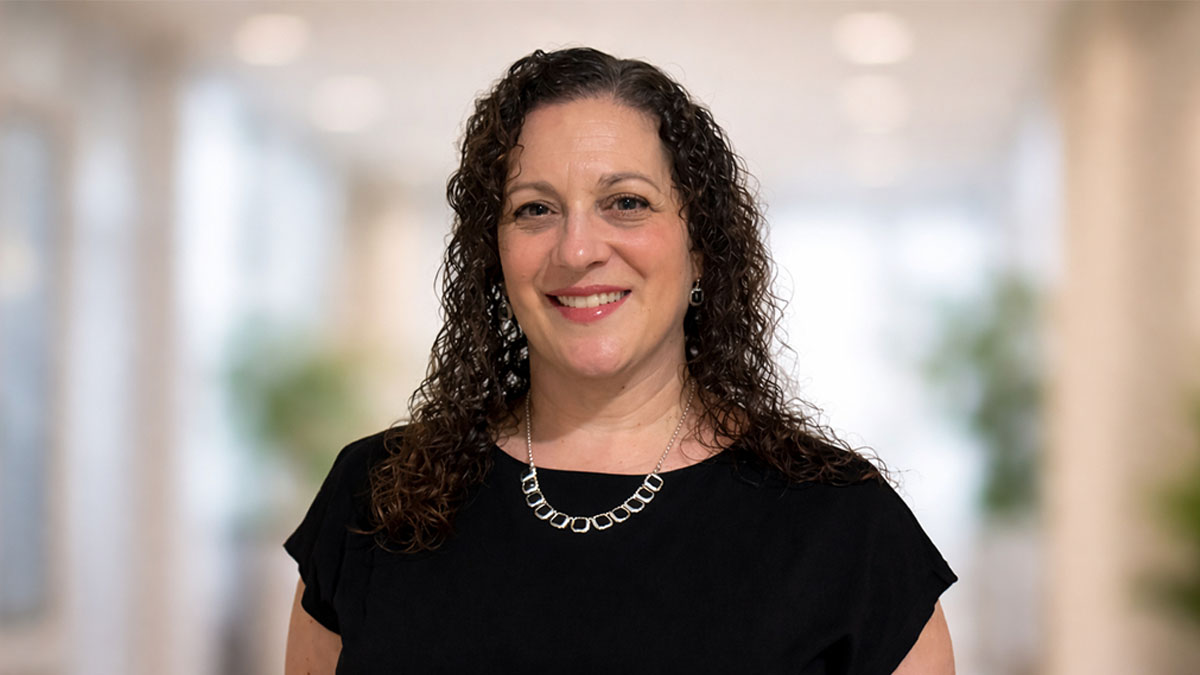
Lisa Scott ’25
Master of Health Administration
Lisa Scott started out her career as a nurse with a medical-surgical unit at Pennsylvania Hospital. Over the years she took on increasing leadership roles, serving on committees and working on new initiatives.
In December 2024 she took the next step, with a promotion to nurse manager in the same unit where she’d started her career. The job required a master’s degree, and for that Scott turned to the Master of Health Administration at LeBow.
“I loved that it was all online, because being a nurse manager, I don’t have all the time in the world to go to class and show up in-person,” she says. “I also liked the variety of classes offered. I already knew the nursing part, so I wanted a program that would help me to better understand this expanded role that I had taken.”
The job of “nurse manager” goes well beyond nursing skills. Scott oversees a vast workforce of registered nurses, patient care technicians and unit clerks, leading a group responsible for payroll and employee evaluations.
“We also have a clinical effectiveness team — a multidisciplinary team that gets together and makes decisions to best suit our patients and our nurses,” she adds. “We decide if we’re going to bring in new equipment or new products, and we brainstorm on issues that we’re having.”
She engages with patient surveys and tracks key metrics around things like hospital-based infections and falls. She’s also answerable to the patients themselves, helping them to resolve any issues that arise.
In short, Scott’s is a big-picture, managerial role, one where, she says, “you need to know about budgets. You need to know risk management and how the rules and regulations work. And most of all, you definitely have to be a strong leader.”
The LeBow MHA program laid the groundwork for all of that.
“The finance courses were so helpful for this role,” she says. “When you’re a bedside nurse, you don’t learn anything about finance — you’re there to take care of the patients.”
In contrast, her MHA coursework led her to work with sample budgets and to invent units based on those budget figures.
A course in risk management looked at health care rules and regulations. “Some of that I already knew, but this gave me a better understanding of the ‘why’ behind them,” she says. “As a nurse manager, I get invited to these different root-cause analysis meetings, and that class at Drexel really helped me be more prepared.”
On the leadership front, Scott says the course in Group Dynamics & Leadership in Health Care Management was especially impactful. From her extensive background in health care, Scott knows it’s a team endeavor that and effective group work is key to successful leadership.
“Breaking down scenarios and figuring out how to play my best part on a team turned out to be really helpful to me.”