The Triple Bottom Line in Action
Global business trends love to obsess over massive, overnight scale. But at the Charles D. Close School of Entrepreneurship, now a vital partner alongside the LeBow College of Business, we know that true economic resilience requires a shift in perspective. For decades, the standard corporate mandate was simple: maximize shareholder value. Success was measured by a single line at the bottom of a fiscal report - profit. However, as global challenges like climate change, systemic inequality and economic instability have intensified, that single-minded focus has proven insufficient. The Triple Bottom Line (3BL) framework emerged not as a fleeting trend, but as a necessary evolution of modern business, proving that a truly successful venture must account for three critical dimensions: People, Planet and Profit.
Why does this matter? Because a business that destroys its environment or exploits its community is, by definition, unsustainable. It is building on a fragile foundation of hidden costs that will eventually collapse. This framework shifts the focus toward systems thinking, acknowledging that businesses are part of a larger ecosystem. When we prioritize the health of the community and the resilience of the planet alongside financial returns, we create ventures that are more durable, more ethical and far more competitive in a conscious market. We are moving the needle from abstract corporate theories to tangible, local action, transforming students into impact architects who understand that social and environmental footprints are just as vital as the balance sheet.
From Classroom to Community
To influence the future of business, we have integrated these core principles into the very fabric of our academic offerings, ensuring that every student graduates with a lens for social and sustainable innovation. This journey begins with our foundational undergraduate course, Triple Bottom Line Entrepreneurship (ENTP 375), where students dive into the history of the sustainability movement and use systems-thinking to navigate live business hurdles. By actively debating the realities of local versus global economic engagement, they learn that a business’s true value is found in its ability to solve problems without creating new ones.
At the graduate level, this focus shifts toward global standards in Social and Sustainable Innovation (ENTP 601). Here, students treat their local communities as a living test track, pitching startups or innovations within existing firms that directly contribute to the United Nations Sustainable Development Goals. This academic training is solidified in Social Entrepreneurship (ENTP 535) where rather than just analyzing business models from a distance, students work directly alongside active social entrepreneurs, using data-driven market approaches to tackle ongoing societal challenges.
Healing Our Backyard
In the sustainable business framework, Planet is often the most difficult pillar for entrepreneurs to tackle practically. At the Close School, we bridge this gap through active laboratories for applied ecology, led by faculty like Associate Teaching Professor Scott Quitel. Here, students launch green business concepts that directly address climate change, waste management and sustainable urban land use.
The impact lands right in our backyard. Through Professor Quitel’s work with the Land Health Institute, entrepreneurial thinking is applied directly to community design and environmental restoration in Philadelphia’s Logan neighborhood. By focusing on native plant production and sustainable land use, we demonstrate that a green business is one that actively heals the space it occupies.
However, our mission doesn’t stop at the city limits. HER Lab serves as our global arm, proving that Philadelphia-born expertise can be exported to solve international challenges. By supporting international founders and mission-driven initiatives, HER Lab ensures the Close School’s reach extends across borders. As Ozlem Ogutveren-Gonul, associate dean of academic programs and associate teaching professor, says:
Innovation doesn’t care about geographic boundaries, and neither should impact. Through HER Lab, we are taking the hyper-local, community-first frameworks we’ve applied in Philadelphia and scaling them to support international founders. It allows our students to see that solving issues on a global scale requires the exact same accountability and cultural empathy it takes to launch a business on a single Philly block.
Prioritizing People and Neighborhoods
The People pillar is often misunderstood as mere corporate philanthropy. At the Close School, we view it through the lens of individual resilience and regional economic mobility. This starts with the entrepreneur themselves. Damian Salas, MBA ’10, assistant teaching professor and founding member of the Inner Circle, emphasizes that a high-quality support infrastructure is vital for founders operating under extreme pressure. Through initiatives like Gathering Resources for Entrepreneurial Wellness, he says, “we prioritize founder performance and mental health, recognizing that a burned-out entrepreneur cannot build a sustainable world.”
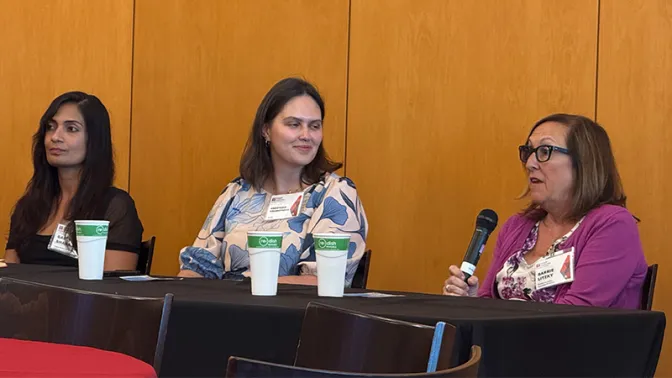
Beyond the individual, we focus on the community as an engine for growth. Programs like Dragon Launch Philly focus on neighborhood entrepreneurship as a vehicle for building local wealth. As Barrie Litzky, PhD, associate professor of entrepreneurship, puts it:
In the social enterprise world, it’s about collaborating… there’s enough pie to go around if we just establish the right partnerships. If I buy coffee from the person down the street instead of a global chain, I am keeping the tax base local. Everyone has a stake in making the local economy great, because we all live here.
This pillar is further exemplified by the work of local entrepreneurs like Dr. Tia Lyles-Williams, whose efforts in biotech provide a roadmap for how high-growth, high-tech industries can create direct opportunity in distressed communities, ensuring that economic mobility becomes a reality rather than a corporate catchphrase.
Fueling the Mission
The final pillar, Profit, is what makes the other two possible. We teach our students that profit is the fuel for purpose. Without a sustainable financial model, a mission-driven business is simply a short-term project. Close’s deep integration with the Sustainable Business Network of Greater Philadelphia (SBN) and SustainPHL allows our students to see the financial viability of this balance in action, putting them in contact with proven regional leaders who provide active proof of concept.
A prime example of this commercial viability is Bo Zhao, founder of Baby Gear Group. Her recognition in TIME’s Best Inventions proves that circular economy models, which allow parents to rent, reuse and recycle premium children’s equipment rather than letting it sit in landfills, are not just environmentally sound but highly prestigious and commercially viable.
This intersection of high performance and strict ethics is mirrored by Jenn Richey Nicholas, CEO of Pixel Parlor. As a certified B Corporation leader, Jenn demonstrates how a branding and design studio can meet the highest verified standards of social accountability and environmental performance while maintaining a top-tier client base. As Jenn says:
Aligning people, planet and profit isn’t a luxury; it’s how modern companies build a resilient economy and earn the trust of their clients. By embedding the Triple Bottom Line directly into their curriculum, the Close School makes sure students aren’t showing up to the Philadelphia market as well-intentioned dreamers. They’re showing up knowing exactly how to build a business that protects their revenue without selling out their values.
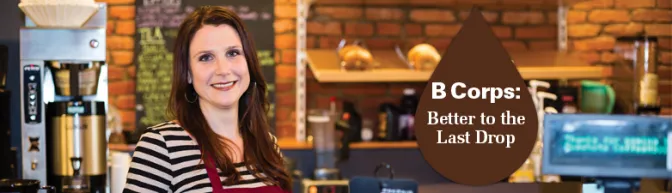
When it comes to scaling these concepts, our students look to mentors like Angela Vendetti. As the founder of Mugshots Coffeehouse, Angela scaled a hyper-local, mission-driven café concept centered on fair-trade sourcing and community gathering space into a powerhouse with multiple locations and over $2 million in revenue. Her journey proves that scaling a business’s local impact and scaling its profits can, and should, happen simultaneously.
Designing a Collabrative Future
By integrating the Close School’s agile mindset with the LeBow College of Business, we are fostering a rising tide mentality across the entire university. Through regional collaborations like the Hult Prize competition with Temple and Rowan, and the Create Change program with the Westphal College of Design, we are actively breaking down traditional institutional silos.
We are creating a virtuous cycle where student learning, professional market practice and community health continuously reinforce one another. We are educating the broader business community that true entrepreneurship is about far more than just starting a company; it is about designing a future where People, Planet and Profit thrive in harmony.